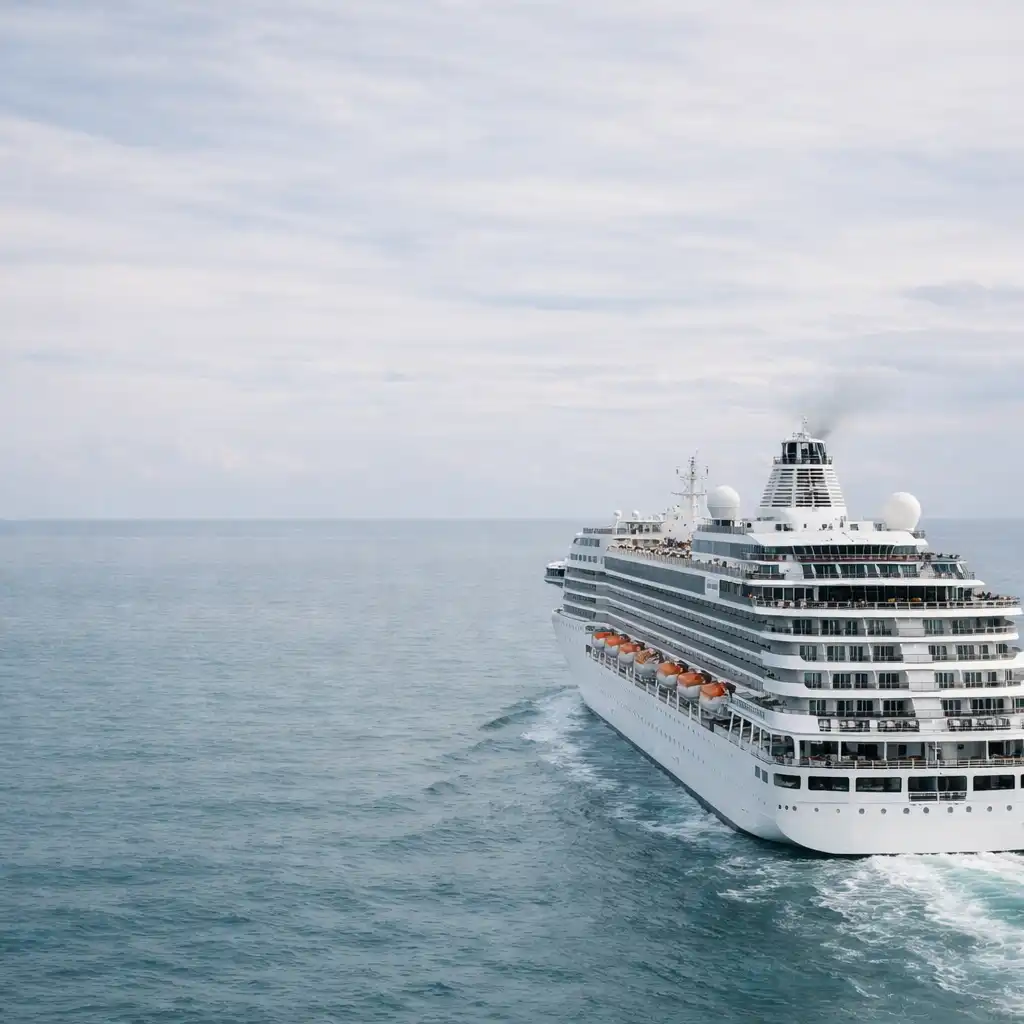
Modern cruise ship travelling across open ocean beneath a pale sky

Ships & decks field guide

Understand the ship before you sail

This practical guide helps you read the working and guest-facing parts of a modern cruise ship: public decks, venues, outdoor routes and the habits that make an unfamiliar layout easier to use.

Layouts vary by ship, operator, refurbishment, itinerary and sailing. Use your own sailing’s official deck plan and daily programme for exact locations, opening details and access notices. Sailrout Einsider is independent; it is not an official cruise line or booking agency.

Pair this onboard overview with the official New Zealand destination resource for broader cruise and port planning.

A transferable mental model

How a modern ship is usually organised

Think in functional zones rather than assuming one familiar arrangement. A deck plan becomes more useful when you first separate where guests sleep, gather, go outside and encounter the ship’s working boundaries.

01

Guest accommodation zones

Stateroom corridors are commonly grouped into quieter accommodation areas, often apart from the busiest public spaces. Cabin access, lift placement and noise exposure vary by vessel, so use the official deck plan for the sailing when comparing a cabin or choosing a route back after an event.

02

Public venue zones

Dining rooms, casual food, lounges, theatres, bars, retail and guest services are usually distributed across public decks rather than gathered in one predictable place. Venue names and access arrangements differ, so check the daily programme for current hours and event locations.

03

Outdoor and observation zones

Upper and outer decks may hold promenades, pool areas, viewing points, walking routes and recreation. Weather, wind, sea conditions and operational restrictions can affect access, and outdoor paths do not necessarily connect continuously around every ship.

04

Crew and operational zones

Technical rooms, service routes, bridge areas and safety systems keep the vessel working but are not assumed guest spaces. Respect restricted boundaries, crew direction and posted access signs; those limits support safe, efficient operations for everyone aboard.

Use the official plan well

Read a deck plan like a local

A deck plan is a reference, not a promise that every route works the same way all day. Start with broad orientation, then use the day’s information to confirm what is open and where you need to be.

  1. Start with the ship’s direction

    Forward, midship and aft are useful first markers, with the ship’s own signs and plan legend as the source of truth. Pick one landmark near a lift or stairwell as a reset point. Deck numbers do not guarantee the same function on different ships.

  2. Trace vertical routes before walking

    Identify which lift banks and stairwells connect your cabin area with the venues you expect to use. Not every stair or lift bank necessarily serves every deck. Allow extra time on embarkation day and before scheduled events.

  3. Use the daily programme for live details

    Keep the printed or digital daily programme beside the static plan. It can show changing opening hours, activity locations, weather-related changes and access notices. Crew instructions and onboard signage always take priority.

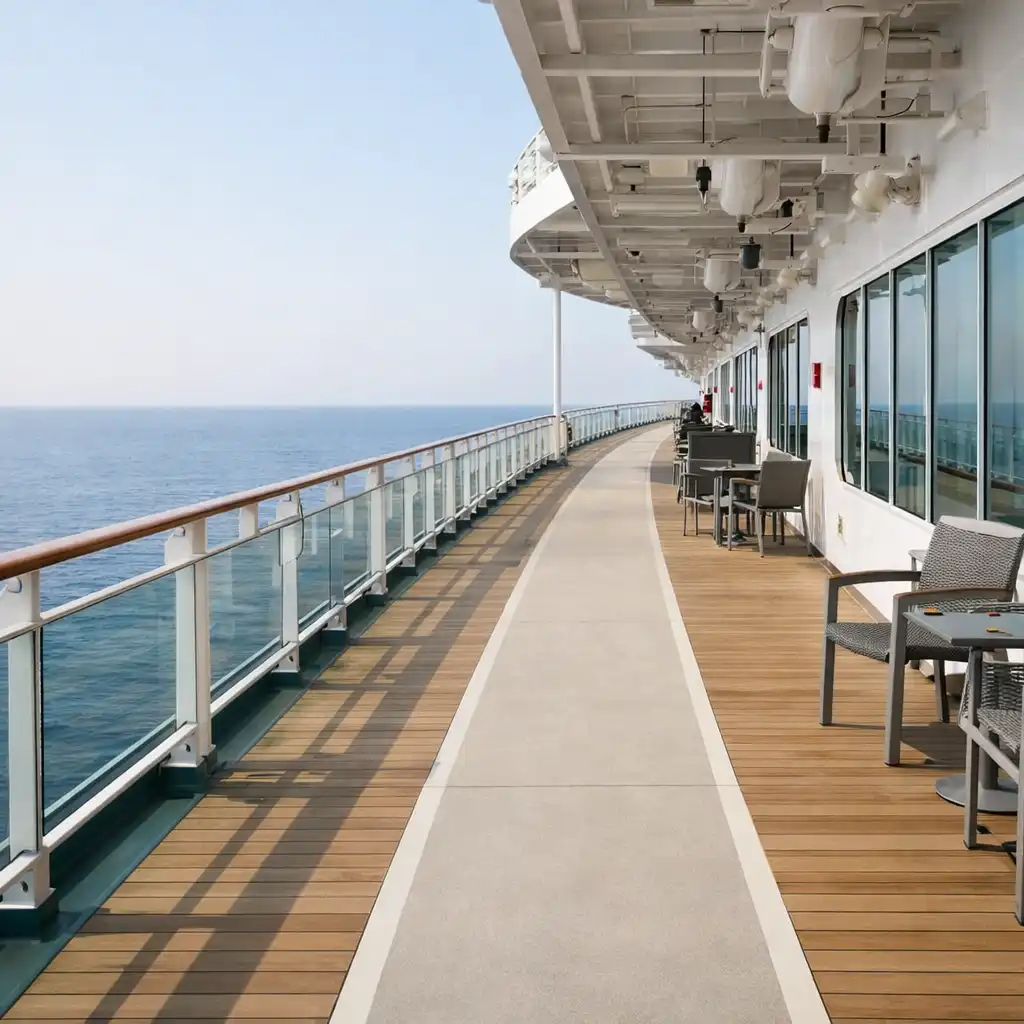
Outdoor cruise ship promenade with walking route, railings and sea horizon
Exterior routes and facilities differ from ship to ship and can change with conditions.

Exterior guest spaces

The open deck: air, views, pools and movement

Promenades and observation routes

Outdoor walking and viewing spaces can be rewarding on sea days, during sailaways, for wildlife spotting or simply for quiet time. Their continuity differs between vessels. Expect wind exposure, wet surfaces or restricted access at times; wear sensible footwear and follow local signage and weather guidance.

Pools and sun areas

Pool decks are shared social spaces whose crowd levels, opening times and weather suitability vary by sailing. Check usage rules, towel guidance and any family or adult-area distinctions where they apply; amenities are not the same on every ship.

Sports and active recreation

Outdoor sports decks and activity areas are weather-dependent and may need advance timing, suitable footwear or age and safety rules. Activities are not universal, so rely on onboard information for current availability.

Plan lightly, check often

Find the right venue without overplanning

Common venue types can help you build a loose rhythm for the day, but the current programme is better than assumptions about names, locations or access arrangements.

Dining spaces

Scheduled dining, casual meals and venue-specific arrangements can all sit within one ship, without following a universal pattern. Check reservation expectations, dress guidance, dietary conversations and opening times. The daily programme and ship app, where supplied, are the current sources.

Practical prompt: check timing before you head out.

Theatre and entertainment areas

Theatres, show lounges and activity spaces follow schedules where arrival timing and seating access can matter. Programme changes can occur, and reservations are not always handled the same way. Consult that day’s listing before setting out.

Timing note: allow a little extra time before a scheduled event.

Lounges and night spaces

Lounges and bars may change purpose throughout the day, moving from talks and trivia to music or evening drinks. Check the onboard schedule rather than expecting a fixed atmosphere from one visit to the next.

Planning cue: follow the programme, not a fixed assumption.

Guest services and practical stops

Reception, shore-excursion desks, medical support pathways, muster information and other help points are useful landmarks rather than attractions. Follow official onboard instructions for safety and medical matters, as service arrangements differ.

Utility cue: crew instructions take priority.

Quiet corners and reading time

Look for lower-traffic seating, observation lounges, libraries where present or sheltered exterior areas. Ships differ, but an early walk after embarkation can reveal a calm spot before the day becomes busy.

Habit: make one early orientation lap.

A working maritime environment

Navigation, safety and lighter-impact operations

Guest life happens aboard a working vessel. The most useful preparation is to understand that operational choices, safety routines and environmental practices respond to real conditions and current requirements.

Route awareness

Bridge and maritime navigation

Qualified crew lead navigation, weather monitoring, route decisions and safety procedures subject to maritime requirements. Bridge and other operational spaces are generally restricted. Guest-facing information may change when conditions change, and crew direction plus shipboard safety information take priority.

Safety first

Safety routines guests will notice

Muster instructions, access controls, announcements and temporary deck closures are routine operational measures, not interruptions to ignore. Pay close attention during the safety briefing and follow official onboard safety instructions rather than relying on procedures remembered from another vessel.

Considered operations

Environmental practices to look for

Cruise operations may focus on waste handling, water management, energy efficiency, shore-power capability where available and local environmental rules. Measures vary by ship, port and operator, so review operator and destination-specific information for current practices rather than assuming every vessel uses the same systems.

Official ship notices, crew directions, safety briefings and port guidance are more current than any independent pre-sailing guide. Sailrout Einsider is an independent information resource, intended to help you arrive better prepared.

Onboard venue context

Casino venues at sea: practical context, 18+ only

Venue context

Some cruise ships include casino venues among their indoor entertainment spaces, but their location, opening status, games and operating conditions vary by ship and itinerary. Casinos may be unavailable in certain waters or at particular times, subject to onboard rules and applicable requirements. This is practical venue information, not a claim about odds, winnings or benefits.

First-day routine

Embarkation-day orientation walk

A short walk soon after boarding can make the ship feel manageable before bags, crowds and evening plans compete for your attention.

01

Locate your cabin route

Walk once from the main lift or stair core to your cabin before the route feels busier. Notice forward, midship or aft signs and any nearby landmarks you can use as a reset point.

02

Find your practical anchors

Identify reception or help points, muster information, a familiar lift bank and a nearby casual food or water stop where available. Follow the ship crew’s official safety directions for muster procedures.

03

Walk one indoor and one outdoor route

Try a weather-protected route and an open-deck route. Conditions can change access, so use suitable footwear and pay attention to posted signs wherever you walk.

04

Check the day’s live information

Consult the ship’s daily programme, app where offered and signage for times, venues and updates. Current onboard information is the best protection against relying on memory or static guides.

Use deck awareness in cabin research

Questions to ask before choosing a cabin location

How close do I want to be to public activity?

Weigh convenience against sound, foot traffic and the feeling of moving through busy public areas. The right answer depends on your habits and the actual deck plan; no location is universally best for every traveller or vessel.

Which vertical route will I use most?

Compare cabin location with likely dining, theatre, pool and shore-day meeting routines using the official vessel plan. Lift and stair access patterns differ, so use official accessibility and deck information for individual mobility needs.

What sits above, below and beside the cabin?

Adjacent spaces can be worth checking on a deck plan when you want to reduce uncertainty around activity, service areas or outdoor traffic. Construction and operations differ, so avoid making noise predictions for unnamed vessels.

Next planning step

Plan the ship, then plan the coast

Use your new ship confidence alongside official information about New Zealand cruise destinations, port experiences and seasonal travel context. Confirm destination and sailing details with the relevant official sources before you travel.

Explore Cruises & Port Guides (opens in a new tab)

External New Zealand destination resource.

Sailrout Einsider provides independent travel information and does not operate cruises or sell bookings.