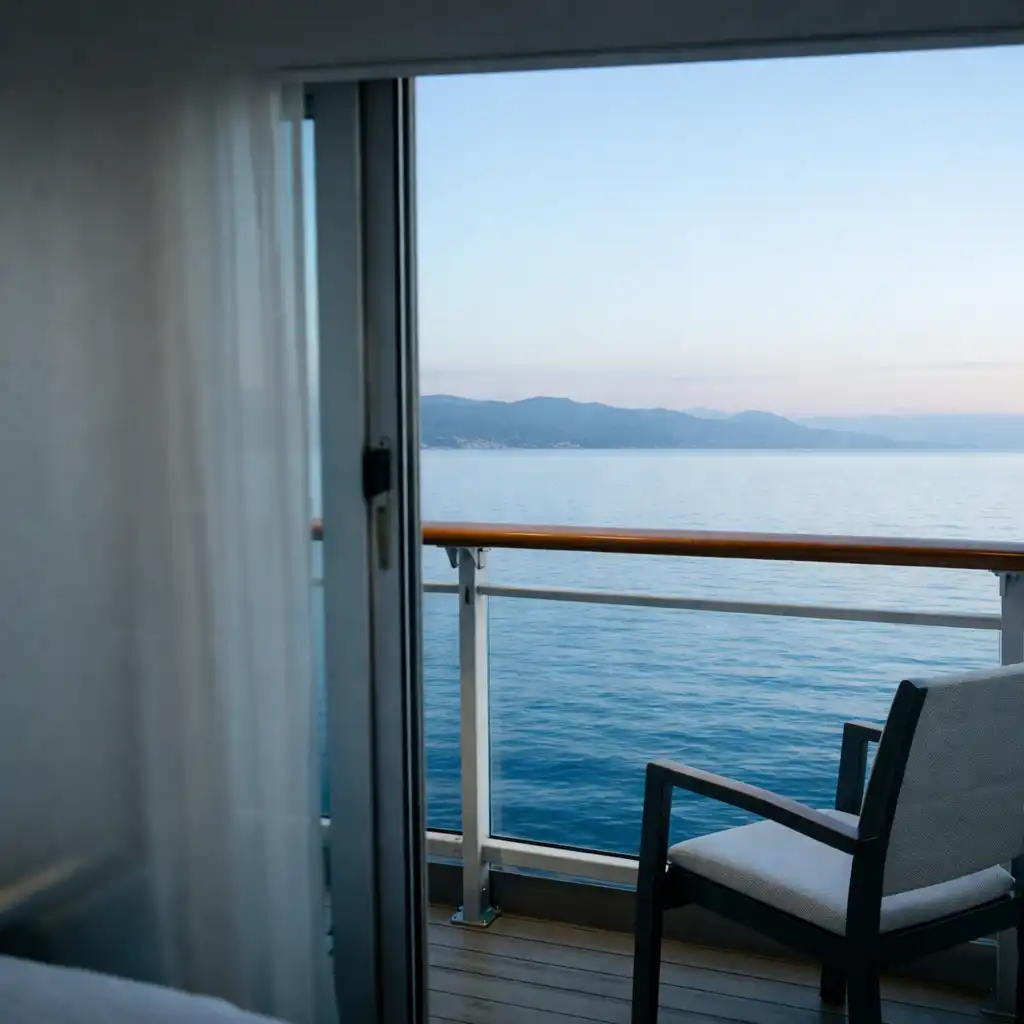
View from a practical cruise cabin balcony towards calm Pacific water and a pale coastal horizon

Independent cabin field guide

Cabins, berths, and better sea days

A cabin is where you sleep, reset, organise shore-day gear, and decide how much privacy or connection to the sea you want. Categories differ by outlook, location, berth arrangement, and layout—not simply by price. Sailrout Einsider is an independent English-language New Zealand cruise guide and onboard lifestyle portal, not a cruise line or booking agency.

Explore Cruises & Port Guides

The destination resource opens separately, so you can keep this cabin guide open while you research ports and routes.

Room types, plainly explained

Start with the kind of room you will use

The most useful category is the one that supports your actual routine. Start with light, outdoor access, and the way you expect to use the room, then compare each option against current sailing information.

No natural light

Interior berths

Interior cabins can suit travellers who prioritise time ashore, onboard venues, or a lower entry cost over daylight in the room. Without a window, orientation and morning light change, so consider whether blackout conditions and compact storage fit your routine. For some travellers, a simple room is exactly right; for others, daylight is a daily comfort rather than an occasional extra.

Check: how will you wake, unpack, and wind down on sea days?

Outside reference

Ocean-view cabins

A window can bring natural light and an outside reference point without the outdoor space of a balcony. Views may vary with ship position and window treatment, so do not assume an uninterrupted outlook from the category name alone. Review the official plan and current cabin description for any obstructed-view notation before treating a window as a guaranteed panorama.

Check: is the published outlook clear for the exact sailing?

Private outdoor access

Balcony cabins

A balcony adds private outdoor access and can make sea days feel less confined, especially for travellers who value fresh air and changing scenery. Depth, privacy, wind exposure, and shading vary by vessel and position. It is a preference-based choice rather than a universally better one: a balcony earns its place when it matches the time you expect to spend there.

Check: outlook, exposure, shade, and the surrounding decks.

Different room arrangement

Suites and larger layouts

Larger accommodation can offer a different room arrangement or more separation, but the meaningful comparison is the published layout and included access on the specific sailing. Distinguish usable space, bed arrangement, bathroom layout, and advertised inclusions. A larger category is not a status marker; it is useful only when its arrangement solves a practical need for your trip.

Check: the plan, sleeping setup, and listed inclusions.

Sleeping and circulation

Berths and space: make the room fit the people

Berth names are only a starting point. Think about the route from door to bathroom, where bags will live, and what the room feels like when everyone is getting ready at once.

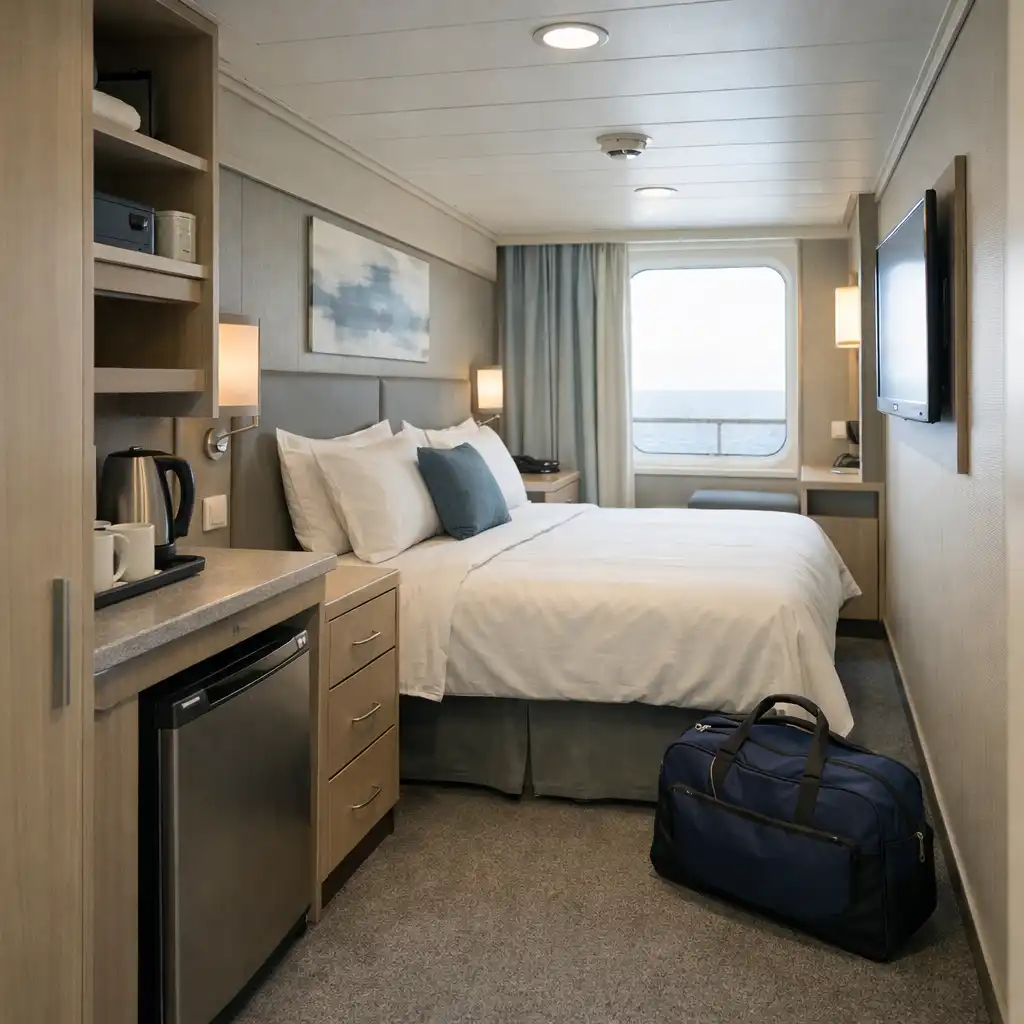
Compact cruise stateroom with a clear walking route, bed, practical storage, and daylight
Illustrative editorial imagery, not a ship-specific cabin layout.

One traveller, one routine

Solo travellers can focus on bed placement, a clear route from door to bathroom, storage access, and whether natural light matters during sea days. A smaller room can work well when the daily routine is simple and belongings have a reliable place. Check the published room plan and bed configuration for the sailing rather than relying on a category name alone.

Two travellers, shared priorities

Sleep: discuss timing, charging needs, and bathroom privacy before assuming one setup suits both people. Living space: bed orientation, luggage habits, and circulation beside the bed can matter more than a broad category label. Agree whether a window or balcony will be a daily-use feature or simply an occasional bonus.

Families and flexible sleeping

Travellers sharing with children or additional adults should confirm the exact berth count, conversion arrangement, and usable daytime floor space in official sailing information. A cabin marketed for several guests may feel very different once beds are prepared. Consider bag storage, bathroom queueing, and nighttime access, and do not assume a particular berth type exists on every ship.

01 Bed configuration
Confirm the exact setup
02 Occupancy
Read current wording
03 Storage
Plan for daily bags
04 Published plan
Use the official source

Position and movement

Where the cabin sits changes the ride

Location is best understood as a collection of trade-offs: motion, walking routes, public spaces, lifts, and the way you prefer to move through a ship. Use position as a starting question, not a promise.

ForwardMidshipAft

Forward and aft trade-offs

Forward or aft locations can offer a distinct sense of the ship and convenient access to particular areas, while motion, wind, and walking distance may feel different from midship. Neither end is automatically noisier or less stable. Compare the cabin’s surroundings on the current published plan and consider the routes you expect to take each day.

Midship for balanced movement

Midship is often a useful starting point for travellers concerned about motion because it sits closer to the vessel’s centre. Comfort still depends on sea conditions and the specific ship, so it is not a guarantee against seasickness. Use official deck information to judge distance from the venues and outdoor areas you expect to use.

Deck elevation and daily routes

A higher or lower deck can change lift reliance, stair distance, proximity to public spaces, and the character of each journey between cabin and deck. Proximity can feel convenient for one traveller and disruptive for another. Look above, below, and across the corridor on an official deck plan before making a final call.

Comfort checks

Protect sleep, light, and quiet

Sound insulation and neighbours

Cabin sound experience can be influenced by adjoining rooms, connecting doors, corridor activity, and what sits above or below on the published plan. Silence cannot be promised, and construction varies. Review the surrounding spaces and note your own sensitivity to noise before you decide.

Check the surrounding spaces.

Natural light and daily rhythm

Daylight can help travellers orient themselves and enjoy changing weather, while an interior cabin may suit people who prefer darkness for sleeping. This is a routine preference, not a quality hierarchy. Verify window outlook and any obstruction notation for the individual sailing.

Match the room to your mornings.

Space efficiency, not just floor area

A workable cabin makes it easy to open luggage, reach storage, pass another person, and move between bed and bathroom without friction. Layouts with similar advertised categories can feel different. Use official imagery and plans as supporting evidence, not a guarantee of every detail.

Trace the daily route through the room.

Access and distance

Think about stairs, lifts, mobility needs, and the routes you expect to take most often, especially on sea days or after returning from port. Check operator information for specific requirements. Distance is also about practical energy management, not convenience alone.

Consider the journeys you repeat.

Shortlist method

A simple cabin comparison method

Use a short, repeatable process to separate the details that matter to you from category names that can sound more decisive than they are.

  1. 01

    Set your non-negotiables

    Ask what must work every day: sleep conditions, light, mobility, berth arrangement, outdoor access, or a preferred ship zone. Pick a small number of priorities rather than chasing every feature. Questions such as “Do I need daylight to reset?” or “Will we both unpack fully?” are more useful than a long wish list.

  2. 02

    Separate category from location

    Compare the room type and its position as two related but different choices. A balcony does not automatically settle questions about deck, distance, noise, or motion. Keep the accommodation category in one column of your notes and the surrounding context in another.

  3. 03

    Read current official details

    Check current published plans, occupancy wording, bed configuration, and any notation about outlook or access for the exact sailing under consideration. Current operator information is the authoritative source for ship-specific details, and it is better evidence than a broad category label.

  4. 04

    Compare the full trip budget

    Consider cabin cost alongside what matters for the wider journey, including shore time, transport, dining choices, and the value you personally place on the room itself. This avoids turning one feature into a measure of the whole voyage.

  5. 05

    Keep a first and second choice

    A second acceptable location or category can make it easier to respond to changes in availability without abandoning the priorities that matter most. Flexibility works best when your fallback still meets your everyday comfort needs.

Scroll to compare →

Planning example, not a ship recommendation
PriorityEvidence to checkFallback option
Daylight routineCurrent window or balcony description, including outlook notes.An interior option if dark sleep and time ashore matter more.
Motion concernPosition on the current official plan and expected daily routes.A different location that keeps the same essential room type.
Berth setupExact occupancy wording and bed configuration for the sailing.A category with a confirmed arrangement that fits the group.
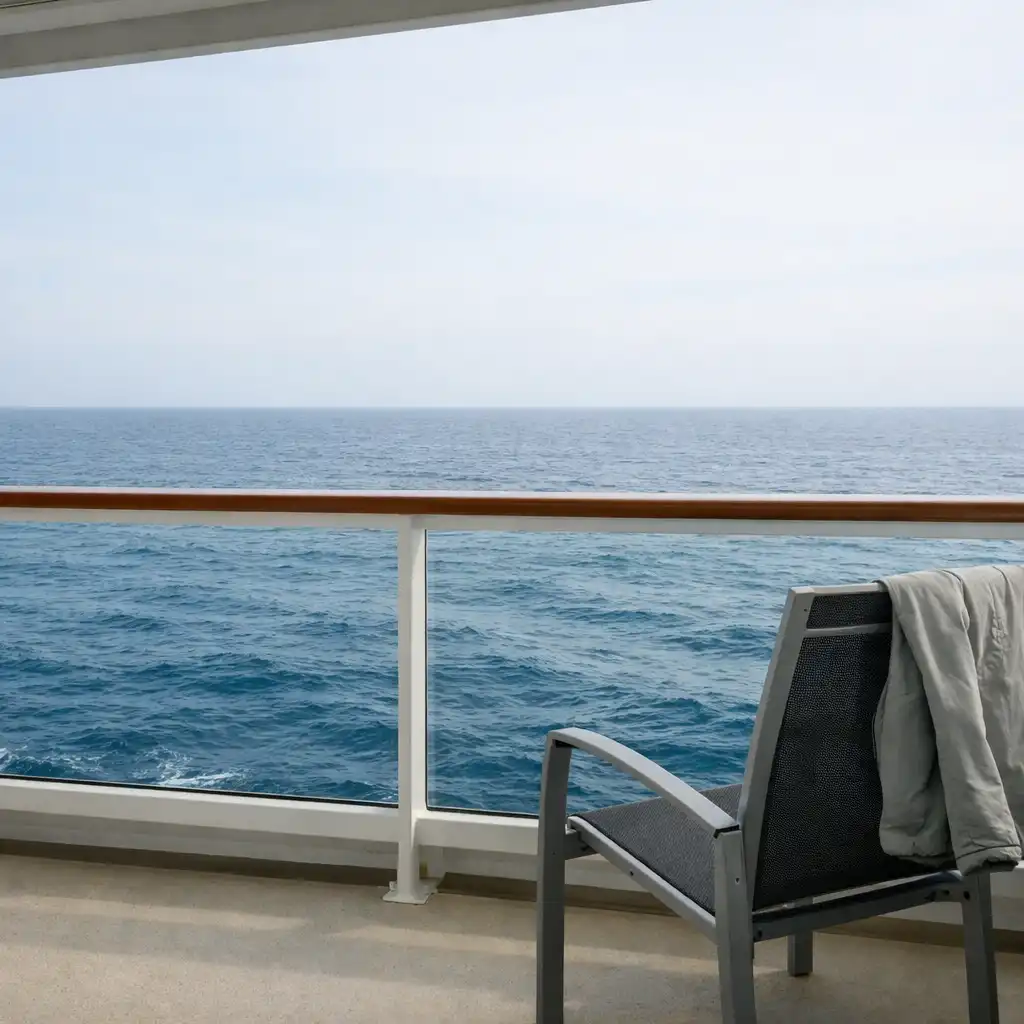
Cruise ship balcony with a simple chair, low rail, and open Pacific water on a quiet sea day

Outdoor space

A balcony is a place, not just a view

A private outdoor area can be meaningful for fresh air, quiet observation, and a slower sea-day rhythm, but only if it matches the way you expect to spend time onboard. Wind, shade, privacy, and location all vary. A sunlit ocean-facing moment can be memorable, yet no balcony should be assumed calm, sunny, or fully private without checking current information.

Outlook

Review any official obstruction notes before you count on a particular view.

Exposure

Consider sun, shade, wind, and the decks or structures nearby.

Routine

Ask whether you will use the space on sea days and while in port.

Onboard context

Plan the whole ship, not only the room

Map the routes you expect to walk

Think through recurring routes between cabin, dining, decks, theatre, lifts, and return points after shore time. A convenient location depends on personal habits, not a universal best deck. Make a short route list before reviewing official plans, and remember that public-venue hours and layouts can vary by ship and sailing.

Continue New Zealand cruise research

Once your cabin priorities are clear, use the official New Zealand destination resource to continue researching ports and the wider journey.

Explore Cruises & Port Guides

Before you move on

Cabin shortlist before you go

Your personal priorities

  • My preferred light level is clear: daylight, darkness, or either.
  • The berth arrangement works for everyone sharing the room.
  • I have a preferred ship zone and a workable alternative.
  • I have considered stairs, lifts, and walking tolerance.
  • I have noted my sensitivity to noise and corridor activity.
  • I know how much time I expect to spend in the cabin.

What to verify in current ship information

  • The exact category description matches the sailing.
  • Bed arrangement and occupancy wording are confirmed.
  • Nearby public spaces are shown on the current plan.
  • Any outlook or obstruction notes are understood.
  • Accessibility information is checked where relevant.
  • Current official documentation supports the final choice.

This guide helps travellers ask better questions. Final ship-specific confirmation belongs with the relevant current operator documentation; Sailrout Einsider is an independent guide, not a booking agency or official cruise line.

Next planning step

Choose with the journey in mind

Take your cabin shortlist into wider New Zealand cruise planning. Balance the time you expect to spend onboard with the ports, coastlines, and sea days you hope to experience. The next step is research, not a booking promise.

Explore Cruises & Port Guides