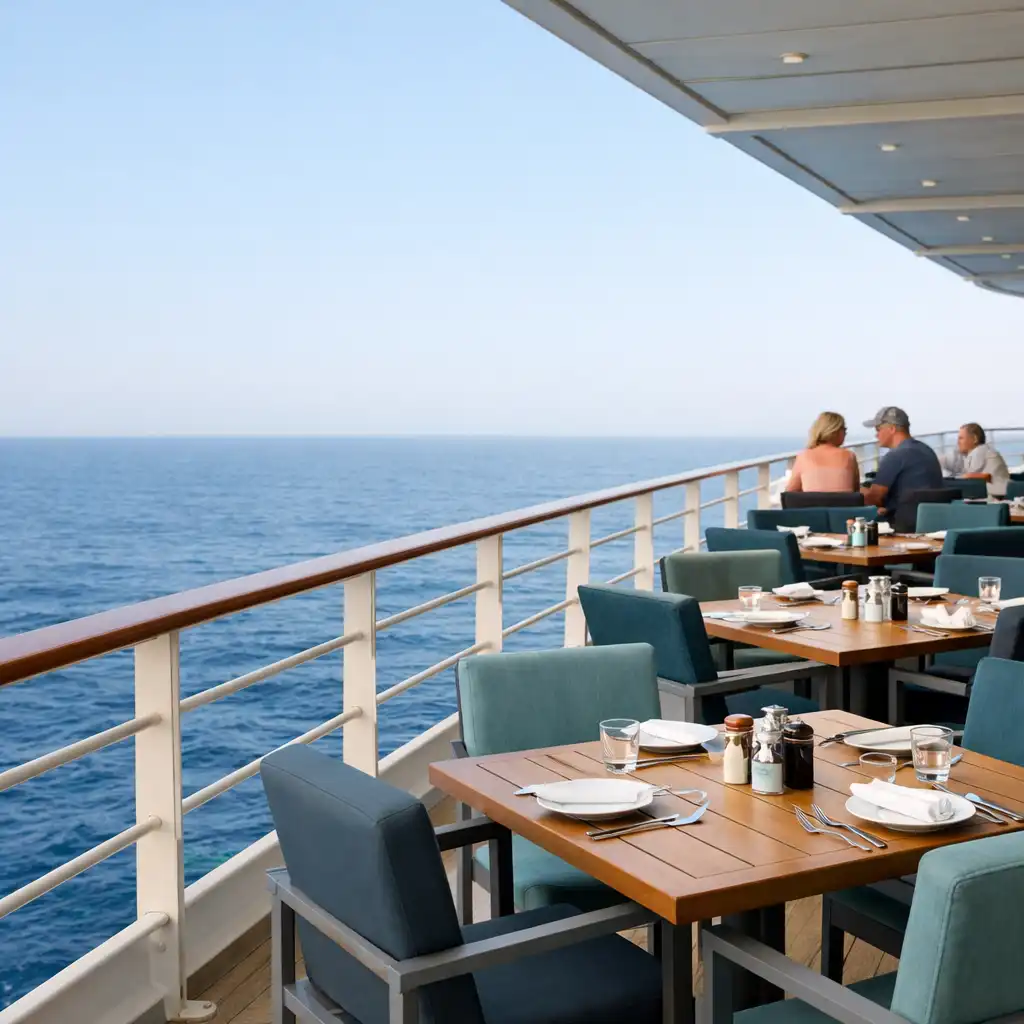
Open-air cruise ship dining terrace with tables beside the Pacific horizon

Independent onboard field guide

Dining and nightlife at sea, at your own pace

A modern voyage can move from coffee and casual breakfast to flexible lunches, planned dinners, live shows, late snacks and quieter deck-side spaces. Sailrout Einsider is an independent guide, not a cruise line or booking agency, so use this page to compare the patterns you may find rather than expect identical venues, hours, menus or inclusions on every sailing.

Explore Cruises & Port Guides

External official New Zealand destination resource; this is a planning link, not a booking offer from Sailrout Einsider.

Compare your current sailing documents and onboard programme for the details that apply to your ship.

A useful starting framework

Read the ship’s food map

Before comparing a particular vessel, separate its food offering into a few practical zones. That makes it easier to judge pace, seating, possible costs and how much advance planning your own day may need.

Flexible backbone

Included everyday dining

Main dining rooms, casual food courts, pool-side counters and seaside buffets often carry the everyday rhythm of a voyage. A food-court layout can make it easier to choose quickly or find seating with different companions, while buffet service may change between breakfast, lunch and dinner. Look at the current sailing information to confirm what is included, where each venue sits and whether its service style changes through the day.

  • Check busy periods and seating flow.
  • Confirm inclusions for your sailing.

Pace and setting

Main dining rooms and casual bistros

A main dining room can feel more structured, with table service and a longer meal rhythm, while a casual bistro may suit an unhurried lunch or lighter evening meal. Neither arrangement is universal: seating, dress guidance and reservation methods vary between ships. Check the daily programme and current operator guidance before assuming a fixed dinner time or a walk-in table.

  • Match meal length to your plans.
  • Review dress and table arrangements.

Optional experience

Specialty and global dining

Specialty venues can offer a distinct cuisine or format, from sushi and regional dishes to chef-led counters and other global dining styles. They may use a cover charge, a la carte pricing, reservation windows or limited seating. Treat menus and terms as sailing-specific: inspect current details before deciding whether the experience fits your budget, timetable and appetite.

Cost model
Verify current terms
Capacity
May be limited

After-hours option

Round-the-clock choices

Late-night or round-the-clock food can be useful after arrival, an evening show, a long port day or an early excursion. Its location and menu may be more limited than daytime venues, and room service may be a separate option with its own terms. Find the after-hours choice on embarkation day so you are not navigating unfamiliar decks when you are tired.

Check ship details for availability, menu and any applicable terms.

A sea-day rhythm

A day of food, from first coffee to late bite

Venue choice becomes easier when it follows the shape of your day rather than a fixed idea of what cruise dining should be.

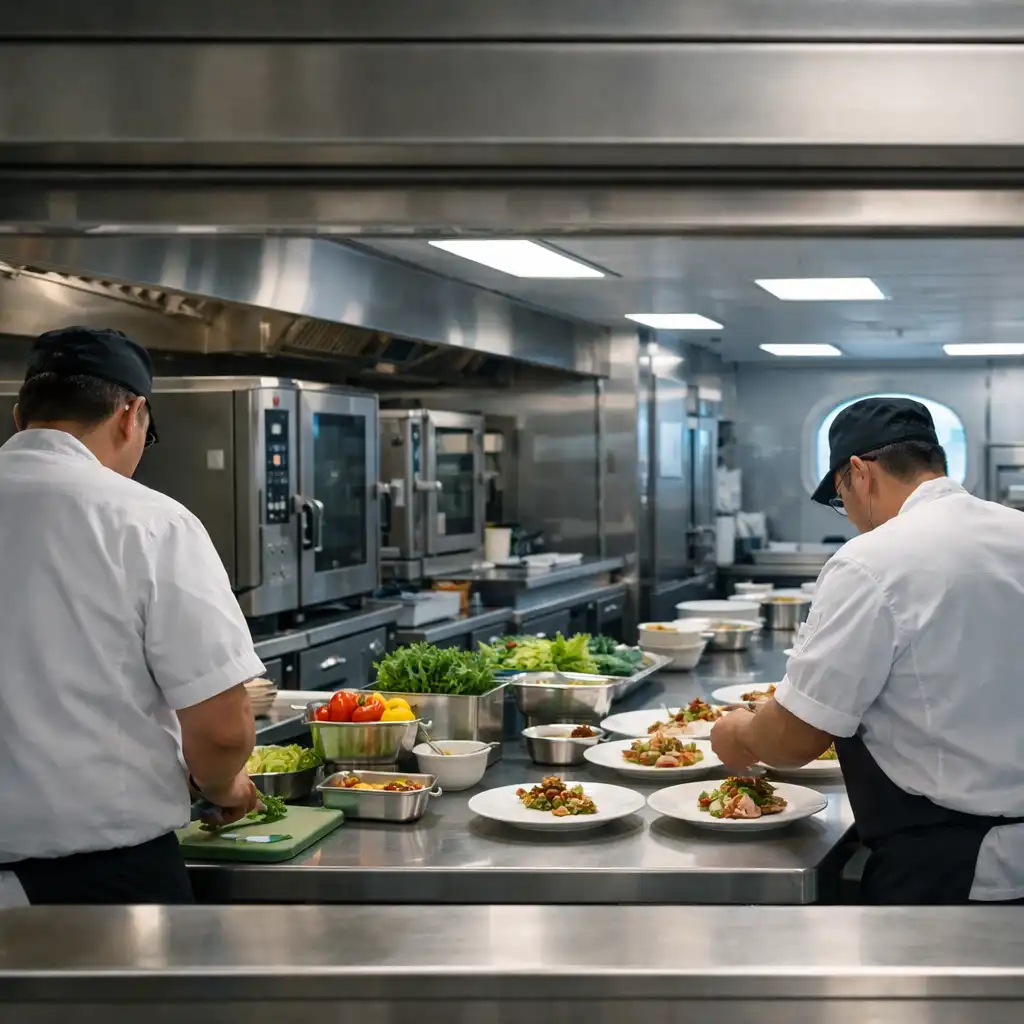
Culinary staff preparing food in a clean modern shipboard galley
Service patterns matter as much as menus when you are planning a day aboard.
  1. Morning

    Start close to your plan

    Choose breakfast location and pace to support an early port meeting, a relaxed deck morning or a quieter start before busier buffet periods. Check the day’s programme for opening times rather than relying on a previous day. Coffee, seating and service style can differ by venue, so a quick look ahead can prevent an unnecessary rush.

  2. Midday

    Choose flexibility over formality

    Casual food courts, buffet counters and bistros often work well between deck time, talks, pool use or a changing weather window. Seaside buffet settings can be useful where available, but outdoor seating is not guaranteed. If you want a quieter lunch, look beyond the busiest serving line for tables away from the central traffic.

  3. Evening

    Decide whether dinner is the event

    Choose a main dining room, casual bistro or specialty restaurant according to how much time you want before a show or lounge set. Specialty tables can be limited and may involve extra charges, so compare reservation times with the performance schedule. A relaxed plan leaves enough time to finish dinner without treating the next venue as a sprint.

    • Dinner pace
    • Reservation time
    • Show start
  4. Late night

    Keep the return route simple

    Late dining can be a useful reset after entertainment, but confirm whether the available choice is complimentary, limited-menu or a long walk from your cabin. Use deck signage and the daily programme, and remember that a calmer late-night space may suit you better than the busiest social venue.

    Find the late option on day one, while the route is still easy to learn.

Optional venues

Specialty dining: choose the experience, check the terms

A specialty meal is most useful when it genuinely suits your evening, not simply because it is different from the main dining room.

Occasion

Match the venue to the occasion

Specialty dining can fit when you want a distinct cuisine, a slower meal or a planned evening anchor. Sushi, regional dishes, chef-led counters and small-format tasting concepts are examples of formats travellers may encounter, not promises for every ship. Choose the setting for personal fit and shared preferences rather than status.

Terms

Check the cost model

Before reserving, distinguish between a cover charge, a la carte items, package eligibility and any cancellation or no-show terms. Current cruise documents or official ship communications are the right source because inclusion terms can change.

  • Cover charge
  • A la carte items
  • Package eligibility
  • Change or cancellation terms

Timing

Plan around capacity and timing

Limited tables and performance start times can make earlier planning useful, especially on sea days or formal evenings. Leave enough time for dinner before a scheduled show, but stay flexible if your preferred slot is unavailable. Reservations are not universally required, so check rather than assume.

  1. Menu
  2. Availability
  3. Reservation
  4. Evening plan
Terms can change

Menus, operating hours, charges, dietary procedures and reservation rules should be confirmed for the specific sailing. Sailrout Einsider does not operate cruise dining venues or bookings; this independent guide helps frame the questions to ask.

Practical preparation

Plan for dietary needs and changing days

Share needs early, then reconfirm onboard

If you have allergies, intolerances, religious dietary needs or other food-related requirements, consult the relevant operator’s current process before sailing and speak with venue staff once aboard. Clear, repeated communication is safer than assumptions, particularly when you use different venues. Ask what can be accommodated on that day, and avoid treating general information as a guarantee of allergen-free preparation.

  • Review the current pre-sailing process.
  • Explain needs clearly to relevant staff.
  • Reconfirm when venues or meals change.

Build a port-day food plan

Excursion meeting times, tender operations, delayed returns and local meals can change the usefulness of breakfast, lunch and late dining onboard. Check whether a suitable venue will be open around your departure and return windows. Carry personally appropriate essentials only in line with ship rules, and leave space in your plan for a changed itinerary or a meal ashore.

  1. Check meeting and return times.
  2. Find open onboard venues nearby.
  3. Allow for delays and changed plans.

Use daily information rather than assumptions. Onboard programmes and venue signs are the current source for hours, dress guidance, availability and operational changes caused by weather or ship activity. Sailrout Einsider is an independent informational guide; the specific sailing’s communications govern operations.

After dinner

Find your pace

An evening at sea can be programme-led, social or deliberately quiet. The useful choice is the one that fits your energy and leaves room to move through the ship without rushing.

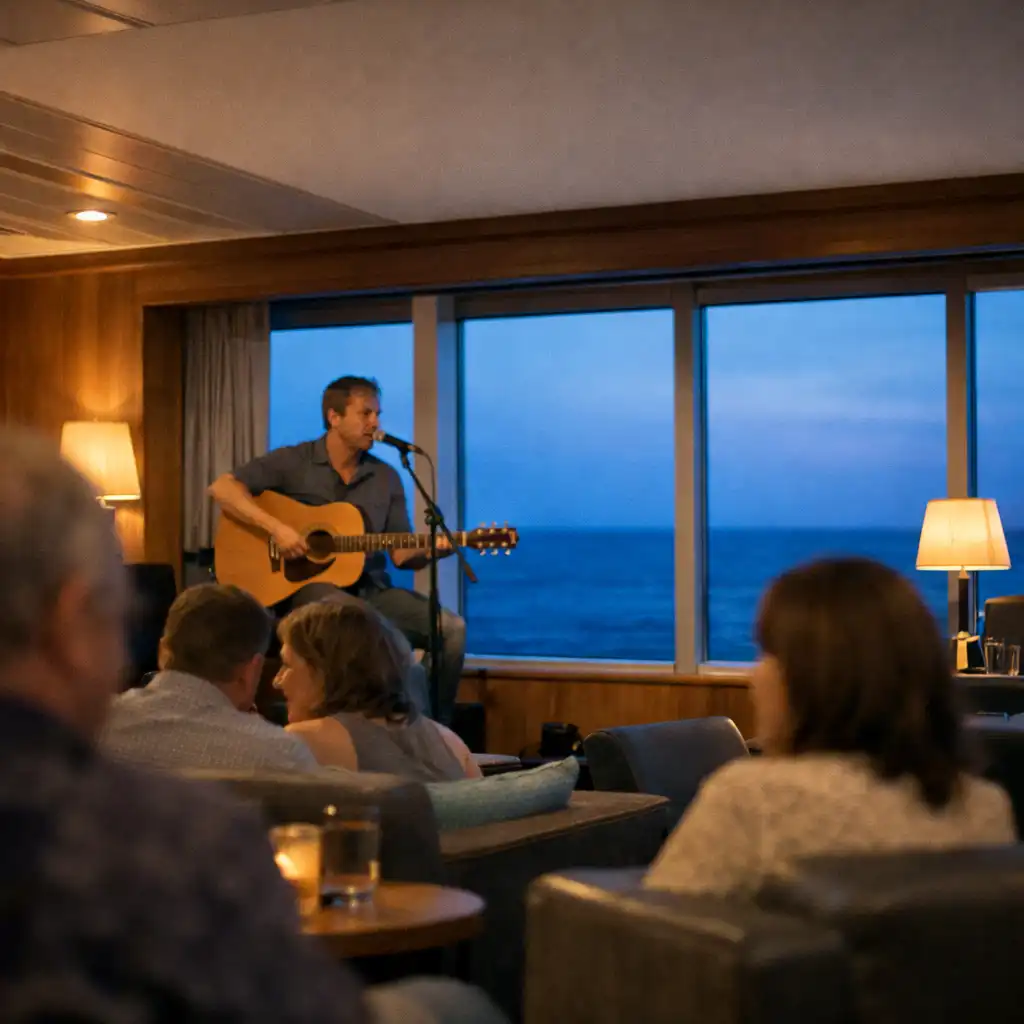
Solo musician performing in a calm shipboard acoustic lounge beside blue-hour ocean windows
A quieter lounge can offer conversation, music and a view without the pace of a larger venue.

Scheduled spaces

Performance venues

Theatres and evening performance venues may host music, stage productions, guest performers, talks or other programmed events depending on the sailing. Use the daily programme to check show times, seating and arrival guidance instead of expecting a particular genre.

Time: daily programmeDeck: ship guideCapacity: venue dependent

Quiet alternatives

Acoustic lounges and deck-side calm

Acoustic lounges, observation spaces and quieter deck areas can suit travellers who prefer conversation, sea views or live background music over a louder venue. Outdoor access depends on conditions and ship operations, so explore the atmosphere earlier in the voyage.

Best for: a slower conversation-led end to the day.

18+

Casino context: adult-only and play-responsibly

Casino access is 18+

Cruise ship casino access is restricted to adults aged 18 and over. Access, opening arrangements, games and location can vary by ship, itinerary and applicable rules. Casinos are one possible nightlife setting, not a core reason to cruise, and the current onboard information is the place to confirm when a venue is operating.

Keep the evening balanced by considering the wider range of shows, lounges, conversations, open-deck walks where permitted and late dining. Consult onboard information for current venue hours and access arrangements.

Before you head out

Make a simple evening plan

A few quick checks can make dinner and entertainment feel unhurried, even when the ship is busy.

  1. 1

    Check today’s programme

    Use current onboard information to confirm venue times, show schedules, dress guidance and any changes. Schedules can shift, so today’s listing matters most.

  2. 2

    Choose your meal pace

    Decide whether the evening suits a quick casual meal, a longer table-service dinner or a reservation-led specialty experience, then match it to the next activity.

  3. 3

    Leave room for the route

    Allow time to move between decks, find a venue, collect a companion or adapt if a room is full or conditions change.

  4. 4

    Keep the night comfortable 18+

    Choose a setting that suits your energy, budget and comfort, and keep adult-only casino play within clear personal limits.

Use this guide as a starting point

Sailrout Einsider offers independent travel information and is not an official cruise line or booking agency. Verify venue availability, menus, pricing, accessibility, opening hours, booking terms and operational changes through current official sailing information. General guidance can help you prepare questions; the operator’s current information controls the details of your trip.

Plan days ashore

Plan your New Zealand cruise days ashore

Dining and evening choices sit within the wider rhythm of a New Zealand cruise day. Before finalising your own plans, explore official destination information for cruise routes and ports. This external resource supports destination planning and does not represent a booking offer or affiliation from Sailrout Einsider.

Explore Cruises & Port Guides

Opens the official New Zealand cruise destination portal in a new tab.